
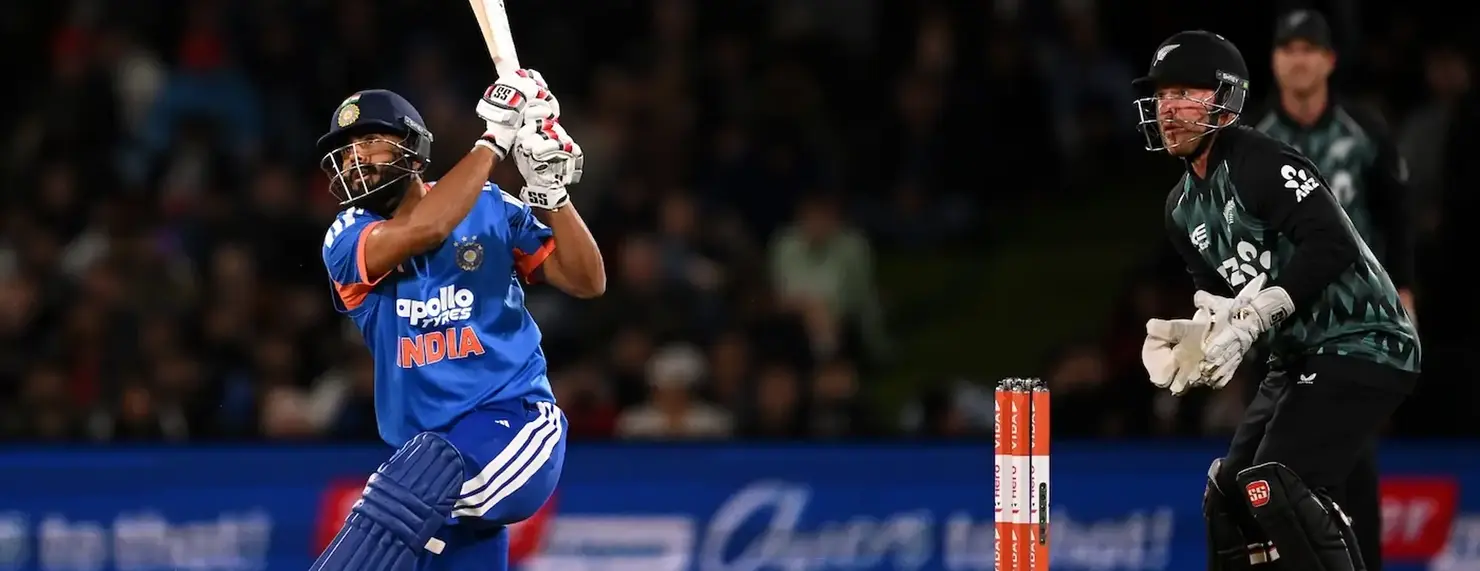
India won the five-match men’s T20I series in New Zealand 3–2. The visitors took the first three matches before New Zealand recovered to win in Auckland and Hamilton. The ODI opener was scheduled for 4 November at Eden Park. This update separates completed T20I results from the remaining tour fixtures and the earlier January series in India.
India vs New Zealand 2026 T20I results
| Date | City | Result |
|---|---|---|
| 22 October | Christchurch | India won by four wickets |
| 24 October | Christchurch | India won by four wickets |
| 27 October | Wellington | India won by six wickets |
| 30 October | Auckland | New Zealand won by 87 runs |
| 1 November | Hamilton | New Zealand won by seven wickets |
Follow the complete tour fixture list for later results and the BCCI ODI match centre for the Auckland opener.
Two tight chases in Christchurch
The first result looked dramatic on the scoreboard and felt just as close at the finish. India reached 230 for six in 19.4 overs after New Zealand made 225 for four. Even with such a strong scoring rate, India needed to manage a chase that stayed live until the final over. Finishing with two deliveries left tells a different story from the raw total alone.
Two days later, India won by four wickets again, this time reaching 181 for six with one ball left. The lower target did not make the ending easier. New Zealand kept picking up wickets, giving the visiting middle and lower order work to do. Taken together, the matches showed how much a side can gain by keeping batting options available late in an innings.
They also illustrate a trap when reading a series score. India moved 2–0 up, but neither match finished with a large cushion. A small change in a final over could have made the series look very different before the teams moved to Wellington.
Wellington settled the series
New Zealand made 198 for three in the third T20I. India reached 199 for four in 13.2 overs. The target was higher than in the second match, but the pursuit ended with 40 balls remaining. That contrast makes Wellington the standout performance of India’s first three games.
When a team scores ahead of the required rate and retains wickets, its batting options widen. A new batter can take time to read the conditions, while the set player can continue to attack selected deliveries. If a side falls behind and loses wickets at the same time, it has much less freedom. Wellington showed how quickly the chase can change when the first pattern takes hold.
New Zealand responded in two different ways
At Eden Park, New Zealand made 259 for seven and held India to 172 for nine. An 87-run margin reflected more than the size of the target. Regular wickets gave India fewer settled batters to attack a demanding rate. Defending a high total still requires the bowling side to keep creating pressure after the powerplay.
Hamilton produced a different result. India scored 191 for eight, and New Zealand reached 195 for three in 18 overs. The BCCI fifth T20I scorecard shows how much time and batting the hosts still had available. A successful defence in Auckland and a controlled chase in Hamilton gave New Zealand two ways to end the series strongly.
What the ODI leg asks of both teams
The away tour lists five ODIs from 4 to 15 November. The results above cover the completed T20I series only. Check the match centre before treating a live score or a fixture listing as a result. The tour also includes Tests, where the demands on the batting order and bowling workload change again.
In an ODI, a fast first ten overs can be useful, but losing three wickets to reach that score may leave the middle order with a long repair job. Watch the partnership after the first wicket and the number of recognised batters left at the 40-over mark. Those two details can explain why similar totals emerge from very different innings.
The bowling plans also change. A quick who has one defined job in a T20I may return in several spells in an ODI. The timing of those spells matters, especially if a captain needs to break a partnership without leaving too few strong overs for the finish. Look for the point at which each side uses its best wicket-taking option.
Keep the January results separate
New Zealand toured India in January 2026. New Zealand won the three-match ODI series 2–1 and India won the five-match T20I series 4–1. The January fixture archive lists the individual results. Those matches belong to a separate tour from the October and November games in New Zealand.
For a fair comparison, start with format and venue before looking at the series score. India won both T20I series, but the away tour included two narrow Christchurch finishes and a heavy defeat in Auckland. New Zealand’s January ODI win likewise tells readers something about the format without settling what will happen in the next set of conditions.
The most useful takeaway
India’s three early chases were enough to win the series. New Zealand’s final two games showed how much the contest still shifted with venue and match situation. The sequence matters more than the idea of momentum alone. Look at wickets in hand, the overs remaining and whether an innings was controlled from the start or rescued late. That makes each result useful when you read the next scorecard.
What the margins tell us about the bowling
Look at how far the match went after the last recognised partnership broke. A four-wicket win with a ball left means the bowling side kept the chase open almost to the end. A six-wicket win with more than six overs remaining usually offers a different clue. The bowlers had fewer chances to force mistakes because the batting side was already well ahead of the rate.
The two New Zealand wins show why it helps to read the margins in context. A side can win while defending through a series of wickets or win a chase by denying the opponent enough wickets. Both are valuable when the tour changes format, but the skills carry over in different ways.
Read next: Most Sixes in International Cricket: Top 10 Hitters of All Time.
1 thought on “India vs New Zealand 2026: Series Updates, Results and Key Takeaways”